


Every workplace has a culture, whether it is intentional or not. Too often, team members feel undervalued, disconnected, or siloed, leading to disengagement, high turnover, and stalled performance.
The Chapman Foundation for Caring Communities partners with organizations to embed caring leadership behaviors at every level, because culture is not a perk; it is a performance strategy. Our Caring Workplace programs equip leaders with the skills and mindsets to:
- Build trust and psychological safety within teams
- Foster intentional connections that strengthen collaboration
- Create a culture of continuous learning and growth
- Recognize and celebrate contributions in meaningful ways
- Connect daily work to a greater purpose
We go beyond traditional training by using experiential learning, coaching, and cohort models that stick, embedding new ways of leading into your organization. And because we partner across industries, our approach is scalable, sustainable, and proven to transform culture from the inside out. When leaders care for their people, retention rises, performance grows, and organizations become places where both people and business can thrive.
Our Three-Part Approach to Culture Change
When organizations work with us, they gain strategic support in three key areas to ensure lasting culture transformation:
1. Empowering Every Team Member
We provide engaging learning & development opportunities designed to strengthen emotional intelligence, improve teamwork, and build a culture where everyone thrives.
2. Equipping Leadership Teams
Culture change doesn’t happen by accident. We help leaders embed culture into strategy, systems, and processes.
3. Measuring What Matters
We ensure organizations have the data and metrics needed to track progress, measure impact, and maintain an accurate pulse on their culture—helping them drive meaningful, results-driven change.
Caring Workplace Leadership Model
A strong culture doesn’t emerge from good intentions alone. It requires a strategy. We work with leaders to move culture from intention to execution, aligning your organization’s vision and values with the strategies, practices, and leadership behaviors that make culture visible every day. The Caring Workplace Leadership Model is the framework that brings that strategy to life. Six core drivers of human-centered culture that, together, close the gap between what your culture aspires to be and how it actually shows up.
These six strategies are the core drivers of human-centered culture. Each one matters on its own, but their power is in how they intersect.
The Caring Workplace Journey
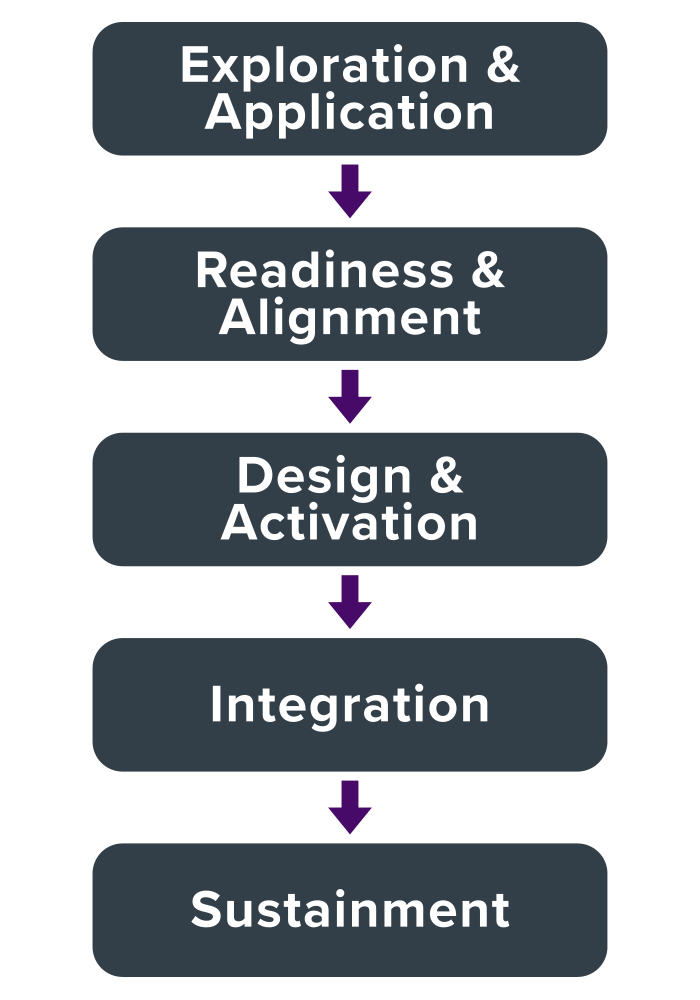
1. Exploration & Application
We take the time to understand your organization, your goals, and where you want to go.
2. Readiness & Alignment
We align your leadership team around a shared vision and a clear path forward.
3. Design & Activation
Together, we build your culture strategy and put it into motion.
4. Integration
We embed culture into daily leadership, systems, and operations so it becomes the way your organization works.
5. Sustainment
We strengthen, scale, and sustain your culture strategy to ensure it grows with your organization long term.
The Result
Organizations that complete the Caring Workplace program build the internal capability to sustain a culture where people and performance thrive. Leaders leave equipped to consistently demonstrate behaviors that strengthen trust, deepen connection, and help team members experience meaningful work every day.
Schedule a Discovery Call to start your Caring Workplace journey.
The way we lead impacts the way people live. You don’t have to sacrifice economic value creation to care for those you have the privilege to lead.
– Bob Chapman, Founder and Board Chairman